
Metal Surface Strengthening
From dies to shafts, rolls to valves: we rebuild worn metal surfaces with the laser or harden the existing surface so it outlasts the base material.
The part is not finished —
its working surface is
On a machine component it is usually not the whole part that wears but a specific zone: the cutting edge of a die, the bearing seat of a shaft, the working surface of a roll, the seat of a valve. The body is sound, yet the whole part gets replaced because of a few millimetres.
We target that zone, in one of two ways:
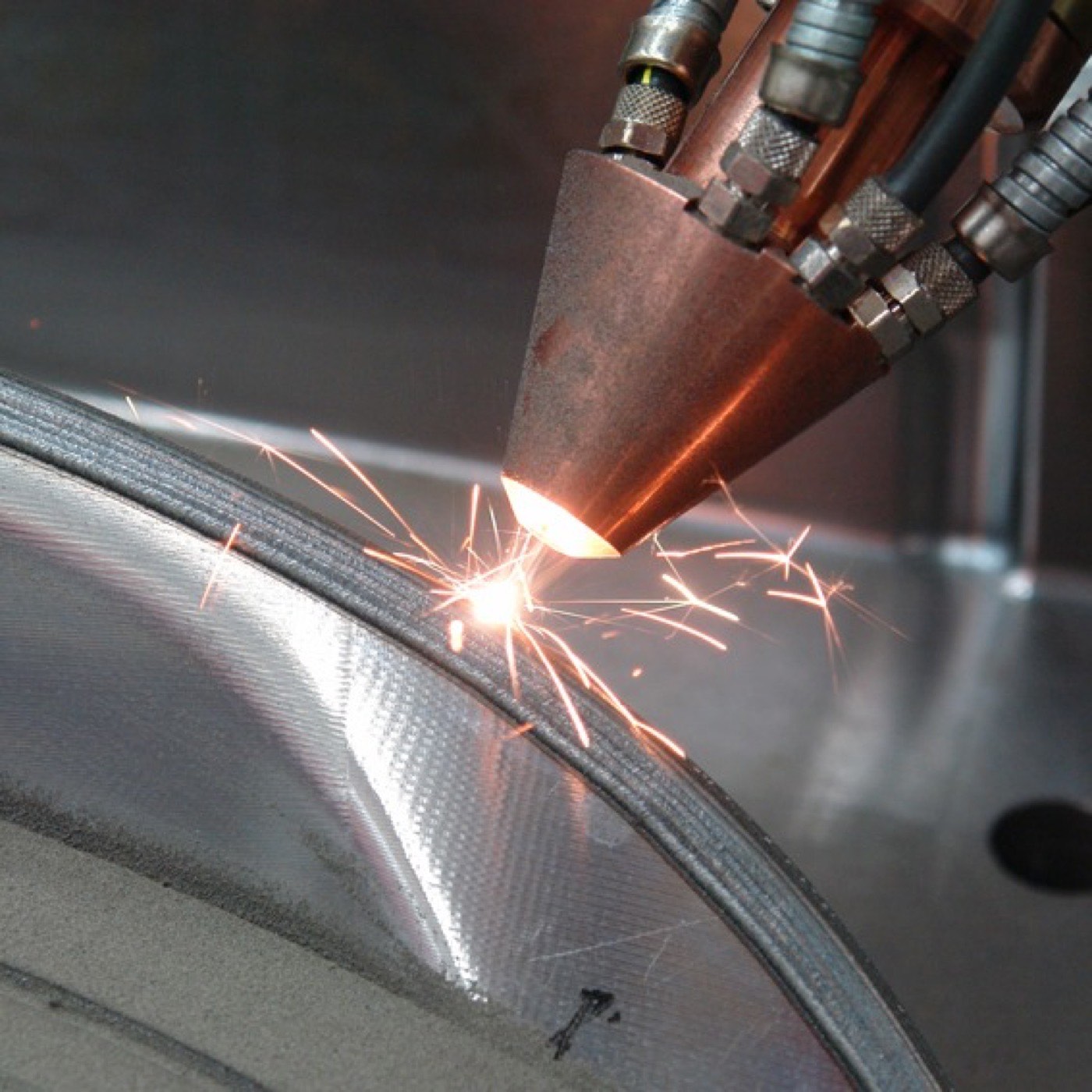
- If material is missing — laser cladding adds it back and recovers the dimension. Laser Cladding →
- If the dimension is right but the surface wears fast — the surface is hardened without adding material. Laser Hardening →
What we work on
The common thread: a part whose surface wears, whose dimensions drift, or which must be replaced again and again.
Dies and moulds
Cutting edges, draw radii, form corners and inserts on sheet-metal dies.
Shafts
Bearing seats, seal grooves, coupling and gear fitting surfaces.
Rolls
Rolling and guide rolls, transport rollers, cylindrical surfaces wearing at high temperature.
Valves and pumps
Valve seats, pump housings and shafts, zones exposed to erosion and cavitation.
Hydraulic components
Cylinder rods and piston rods — the application considered in place of hard chrome plating.
Wear parts
Crusher jaws, feed elements, mixers, cutting edges and guide surfaces.
How a part is assessed
Show us the part
Send a photograph of the worn area, the material and the operating conditions via WhatsApp. Add drawings or dimensions if available.
Technical assessment
Based on material, wear type and operating conditions we determine whether cladding or hardening is required, and which alloy fits.
Robotic application
The work is carried out in a programmed robot cell. When the same part returns, it is processed with the same parameters.
Inspection and delivery
The part is checked after processing. On request it is delivered with a machining allowance for turning or grinding.
When it is not suitable: if the body of the part carries a crack, fracture or fatigue damage, surface treatment is not the answer. Cladding and hardening concern the surface; they do not repair structural damage. We tell you this before you ship the part.
Which of your parts is wearing?
Send a photograph of the worn zone and the material; we will assess whether cladding or hardening is required.